Missing teeth can affect much more than the appearance of a smile. They may make it harder to enjoy certain foods, speak clearly, or feel comfortable in social situations. Fortunately, today’s dentures offer practical and natural-looking ways to replace several or all missing teeth.
For patients considering dentures in Ephrata, PA, understanding the available choices can make the process feel much less overwhelming. Dentures are not one-size-fits-all. A dentist considers the number of missing teeth, the condition of the remaining teeth and gums, jawbone support, personal preferences, and budget before recommending an approach.
This article provides general educational information and does not replace an examination or personalized advice from a dentist. Anyone experiencing dental pain, swelling, sores, or problems with a denture should contact a dental professional.
What Are Dentures?
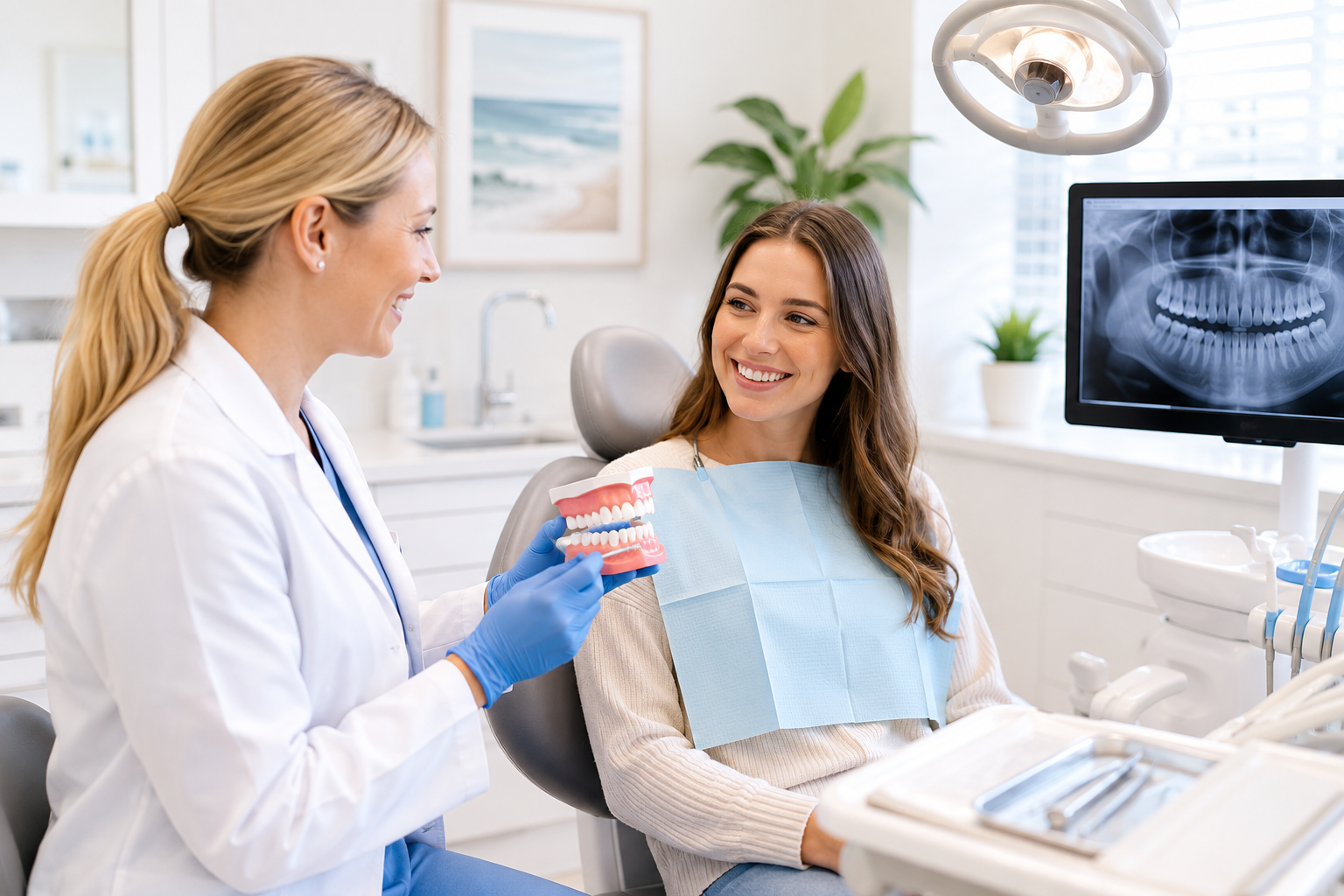
Dentures are removable dental appliances designed to replace missing teeth and surrounding tissues. Depending on the design, they may replace every tooth in an arch or fit around healthy natural teeth.
In addition to restoring the appearance of a smile, dentures can support the lips and cheeks and make many everyday activities easier. The American Dental Association’s MouthHealthy resource explains that dentures can help restore a smile and fill out the appearance of the face and profile.
Modern dentures are created to fit the contours of an individual mouth. The teeth can be selected and arranged to complement the patient’s facial features, while the gum-colored base is designed to look natural. Results and comfort vary, so careful planning and follow-up adjustments remain important.
Types of Dentures to Consider
The right denture depends on how many teeth need replacement and whether any natural teeth can be maintained. A dental examination is the best way to determine which option may be appropriate.
Full dentures
Full, or complete, dentures replace all the teeth in the upper jaw, lower jaw, or both. They rest on the gums and are shaped to work with the mouth’s natural anatomy.
A conventional full denture is usually made after remaining teeth have been removed and the tissues have healed. This approach allows the dentist to design the denture for the mouth after initial healing, although the patient may be without teeth during part of the process.
Partial dentures
A partial denture replaces several missing teeth while preserving useful natural teeth. It commonly includes replacement teeth attached to a base, with components that help secure it inside the mouth.
Partial dentures can fill visible gaps and help distribute chewing forces. They may also help keep remaining teeth from shifting into open spaces. Those natural teeth still require consistent brushing, flossing, and professional care.
Immediate dentures
An immediate denture is placed on the same day that remaining teeth are removed. It allows a patient to leave the office with teeth rather than waiting through the early healing period without them.
However, the gums and jaw change shape as they heal. An immediate denture may therefore require adjustments, relining, or eventual replacement. The ADA notes that immediate dentures may need to be relined or remade after the jaw has healed.
Implant-supported dentures
Some dentures can connect to dental implants placed in the jaw. Depending on the design, the denture may remain removable or may be secured in a way that requires professional removal.
Implants can provide additional support and stability, but they involve surgical treatment and are not suitable for everyone. Candidacy depends on factors such as oral health, bone support, medical history, healing capacity, and the proposed restoration. Implant placement, healing, and delivery of the final teeth are separate phases, so the entire process may involve multiple visits over an individualized period.
What to Expect When Getting Dentures
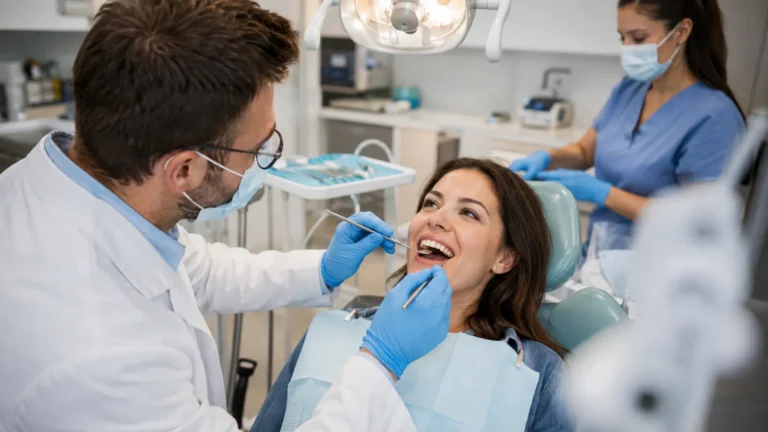
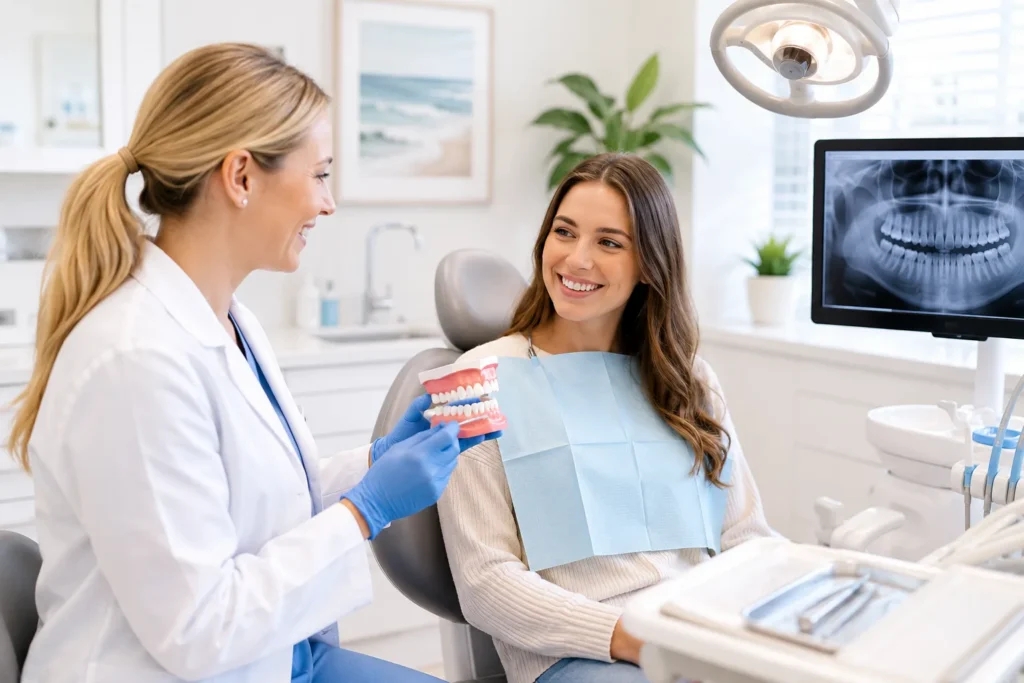
The process begins with a detailed evaluation. The dentist examines the gums, remaining teeth, bite, and other oral structures. Dental images may be needed to assess areas that cannot be seen during a visual examination.
If unhealthy teeth need treatment or removal, the dentist will explain how that care relates to the denture plan. Whenever appropriate, preserving healthy natural teeth may improve support and function.
Records of the mouth are then used to plan the denture’s fit. Depending on the case, these may include impressions or digital records, bite measurements, and information about tooth shape and color. Trial fittings may be used to evaluate appearance, speech, and the way the upper and lower teeth meet before the final appliance is completed.
After delivery, follow-up visits are often necessary. Even a carefully made denture may create a pressure point once it is worn during normal speaking and eating. A dentist can identify these areas and adjust the appliance without compromising its overall fit.
Adjusting to New Dentures
New dentures often feel unfamiliar at first. The tongue, cheeks, and facial muscles need time to adapt to the appliance. Temporary changes may include increased saliva, mild soreness, a sense of fullness, or difficulty pronouncing certain words.
The ADA advises that new dentures may feel awkward for the first few weeks and that follow-up appointments are generally needed to check and adjust the fit. Persistent pain, irritation, or looseness should not simply be ignored.
Tips for eating comfortably
- Begin with soft foods cut into small pieces.
- Chew slowly and use both sides of the mouth when possible.
- Add firmer foods gradually as comfort and control improve.
- Use caution with very sticky, hard, or sharp-edged foods.
- Ask the dentist for guidance if the denture repeatedly shifts while eating.
Tips for clearer speech
Reading aloud or practicing commonly used phrases can help the mouth adapt. Speaking slowly at first may also make certain sounds easier. If speech remains difficult, the denture’s position or bite may need to be evaluated.
How to Care for Dentures and the Mouth
Dentures need daily care even though they cannot develop cavities like natural teeth. Food debris and plaque can collect on the appliance, contributing to odors, staining, and gum irritation.
- Remove and rinse dentures after meals when practical.
- Clean them daily with a denture brush and a cleaner recommended by the dentist.
- Avoid abrasive household products that could scratch the surface.
- Handle dentures over a folded towel or basin of water to reduce the chance of breakage if dropped.
- Clean the gums, tongue, and roof of the mouth gently each day.
- Keep removable dentures moist when they are not being worn, following the dentist’s instructions.
Patients should ask whether their dentures should be removed overnight. Giving oral tissues a rest is often recommended, but individual instructions may vary.
Denture adhesive may improve confidence in certain situations, but it should not be used to hide a poor fit. A denture that suddenly needs much more adhesive, moves frequently, or causes recurring sores should be professionally assessed.
When a Denture Needs Adjustment or Replacement
The mouth continues to change after tooth loss. Gums and the underlying jaw can gradually change shape, causing a once-comfortable denture to loosen. Normal wear can also affect the chewing surfaces and bite.
Signs that a dental visit may be needed include:
- Recurring sore spots or gum irritation
- Clicking or movement during conversation
- Difficulty chewing foods that were previously manageable
- A visible crack, chip, or missing denture tooth
- Changes in facial support or the way the teeth meet
- A need for increasing amounts of adhesive
- A denture that no longer stays comfortably in place
A damaged denture should not be repaired with household glue or a do-it-yourself kit. These materials can irritate oral tissues, make the appliance unsafe to wear, or complicate professional repair. If a denture breaks, the pieces should be saved and the dental office contacted for instructions.
How Much Do Dentures Cost in Ephrata, PA?
Denture fees vary because treatment plans differ. The cost may depend on whether the patient needs a full or partial denture, extractions or other preparatory care, the materials selected, the complexity of the fit, and whether implants are involved.
When comparing estimates, patients should ask what the fee includes. Useful questions include whether diagnostic records, follow-up adjustments, relines, repairs, or temporary appliances are part of the quoted cost. Dental insurance coverage also varies, so the practice and insurance carrier can help explain available benefits and expected out-of-pocket expenses.
The lowest advertised price does not always represent the total treatment cost. Fit, follow-up care, durability, appearance, and access to adjustments are all important parts of the decision.
Frequently Asked Questions About Dentures
Will dentures look natural?
Dentures can be customized for tooth size, shape, shade, and arrangement. The goal is to create a smile that complements the face rather than looking identical for every patient. The final appearance depends on anatomy, materials, design, and treatment needs.
Can a person sleep while wearing dentures?
Many patients are advised to remove removable dentures at night so the oral tissues can rest and the appliance can be cleaned. A dentist should provide instructions based on the denture type and the patient’s oral health.
Can dentures be worn if some natural teeth remain?
Yes. A partial denture may replace missing teeth while fitting around healthy natural teeth. In some cases, retaining suitable teeth can provide useful support. A clinical examination determines whether those teeth are healthy enough to keep.
Are dentures supposed to hurt?
Mild tenderness can occur while the mouth adjusts, but ongoing pain is not something a patient should accept. Persistent sores, sharp discomfort, or difficulty wearing the denture should be evaluated so the cause can be addressed.
How often should denture wearers see a dentist?
Regular dental visits remain important even when no natural teeth remain. The dentist can examine the gums and other oral tissues, evaluate the bite, and check whether the denture still fits properly. The appropriate visit schedule depends on individual health and risk factors.
Explore Denture Options With Ephrata Family Dentistry
Choosing dentures is a personal decision, and the best option should reflect the patient’s oral health, comfort, priorities, and daily routine. A professional evaluation can clarify whether a full, partial, immediate, or implant-supported design may be worth considering.
Ephrata Family Dentistry provides restorative dental care, including dentures, for patients in Ephrata, PA. The practice is located at 815 Martin Ave, Ephrata, PA 17522. Patients who have missing teeth, an uncomfortable denture, or questions about available options are encouraged to schedule a consultation and discuss the next step with the dental team.